Product Portfolio
Indeed Accessibility
The problem:
Indeed had 14 years of accessibility debt and no plan to fix it. 64 product teams, 32 countries, zero shared standards. Accessibility meant something different to everyone—which meant it meant nothing to anyone.
What I built:
I architected Indeed's first company-wide accessibility program from scratch. Defined the standard (WCAG 2.1 AA), built a remediation framework, and created a culture where 100+ engineers actually wanted to fix 6,000 bugs.
How it worked:
Prevent, Fix, Monitor: An "always-on" system that embedded accessibility into existing workflows instead of bolting it on
Friendly neighborhood approach: Treated accessibility debt as a systems problem, not a moral failing. Teams weren't shamed—they were supported
Beyond compliance: Partnered with Fable to connect teams directly with disabled users. You can't build for people you never talk to
Year one impact:
Took Indeed from critically inaccessible to compliant across all core products. More importantly: shifted company culture to see accessibility as a product quality issue, not a legal risk.
What made it work:
Most accessibility programs fail because they're top-down mandates that make teams feel inadequate. I built this as a peer-to-peer support system—speaking in plain language, reducing friction, and making it easier to do the right thing than to ignore the problem.
Tags: Accessibility · Program Leadership · Cultural Transformation · Scale


Indeed Product Inclusion
The problem:
Product teams were shipping features that alienated users—not out of malice, but because they had no framework for catching bias before launch. Inclusion Resource Groups were reactive firefighters instead of strategic partners.
What I built:
Founded Indeed's first product inclusion program—an open consultation service that embedded inclusion review into the product development cycle. Inspired by Annie Jean-Baptiste's work at Google, but designed for Indeed's specific gaps.
The framework:
Created a 300-point taxonomy that gave teams a repeatable process for evaluating sensitivity, authenticity, and inclusion across all vulnerable communities. Not a checklist—a thinking tool that taught teams how to see bias, not just what to avoid.
Two-year impact:
Consulted on 150+ product, marketing, and content initiatives
Shifted Inclusion Resource Groups from damage control to strategic input
Turned "don't ship something offensive" into "build something that actually works for everyone"
What made it work:
Most inclusion programs are gatekeepers that slow teams down. I positioned this as a service—come early, come often, we'll help you build better. The "Some Very Special TV" training built empathy at scale by showing teams why inclusion isn't just politically correct—it's better product thinking.
Tags: Product Inclusion · Framework Design · Cross-functional Leadership · Education
Paysa Compensation Tool & Experience Design
The product:
Paysa used big data and machine learning to show people their real market value—then helped them negotiate for it. Our users made $500 million more in salary negotiations, job offers, and annual reviews.
The challenge:
When I joined, Paysa had one PM (focused purely on growth metrics) and zero designers. The product worked technically but felt intimidating and fragmented. Worse: our UX research showed women in tech weren't converting—they found the tone aggressive and the experience overwhelming.
My role:
I owned the entire user experience strategy and execution. Built the design function from scratch, unified the product architecture across desktop/mobile/email/content, and drove rapid design-dev sprints against an aggressive roadmap.
What I built:
Architectural overhaul (first 3 months):
Redesigned the entire product system to feel like one cohesive experience instead of disconnected features. Created visual and tonal consistency across every touchpoint.
User-centered redesign:
Recognized that our users weren't just looking for data—they were anxious and insecure about asking for money. Redesigned the brand, copy, and visuals to build confidence and reduce friction. Made asking for more money feel achievable, not adversarial.
Inclusive design for women in tech:
Shifted tone and positioning based on research showing women needed different support in salary negotiations. This focus drove 200% month-over-month growth in sign-ups.
Impact:
200% MoM growth in user sign-ups
Users negotiated $500M in additional compensation
Unified fragmented product into coherent system in 90 days
Established design as equal partner to engineering in product decisionsWhat I learned:
Split focus kills products. The founders pushed us to build both consumer and employer experiences simultaneously to prep for fundraising. It diluted both. I should have fought harder to maintain focus—taught me that advocating for the right strategy is as important as executing it.
What I'd do differently:
Build a design system from day one. I deprioritized it to ship faster, then paid for it in technical debt and inconsistent execution later.
Tags: Product Design · 0-to-1 Product · User Research · Growth · Gender Inclusion


Walmart Goodies: First Corporate Food Subscription Box
The opportunity:
In 2014, subscription boxes were a startup phenomenon—no major retailer had figured out how to compete. Walmart had two problems: Millennials wouldn't shop their stores, and Amazon was eating their lunch online. Goodies was the bet that younger shoppers wanted discovery, not catalogues.
What I built:
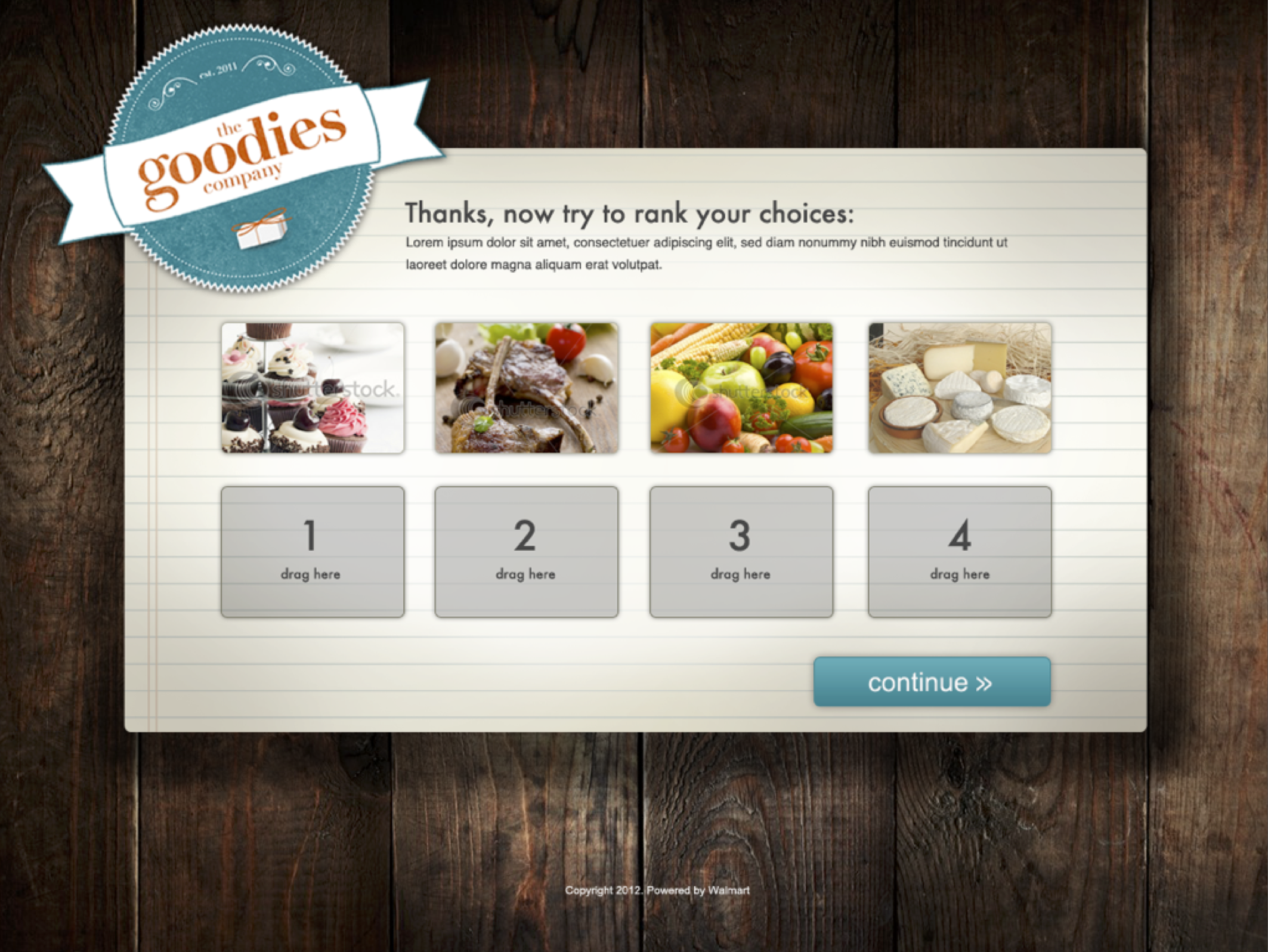
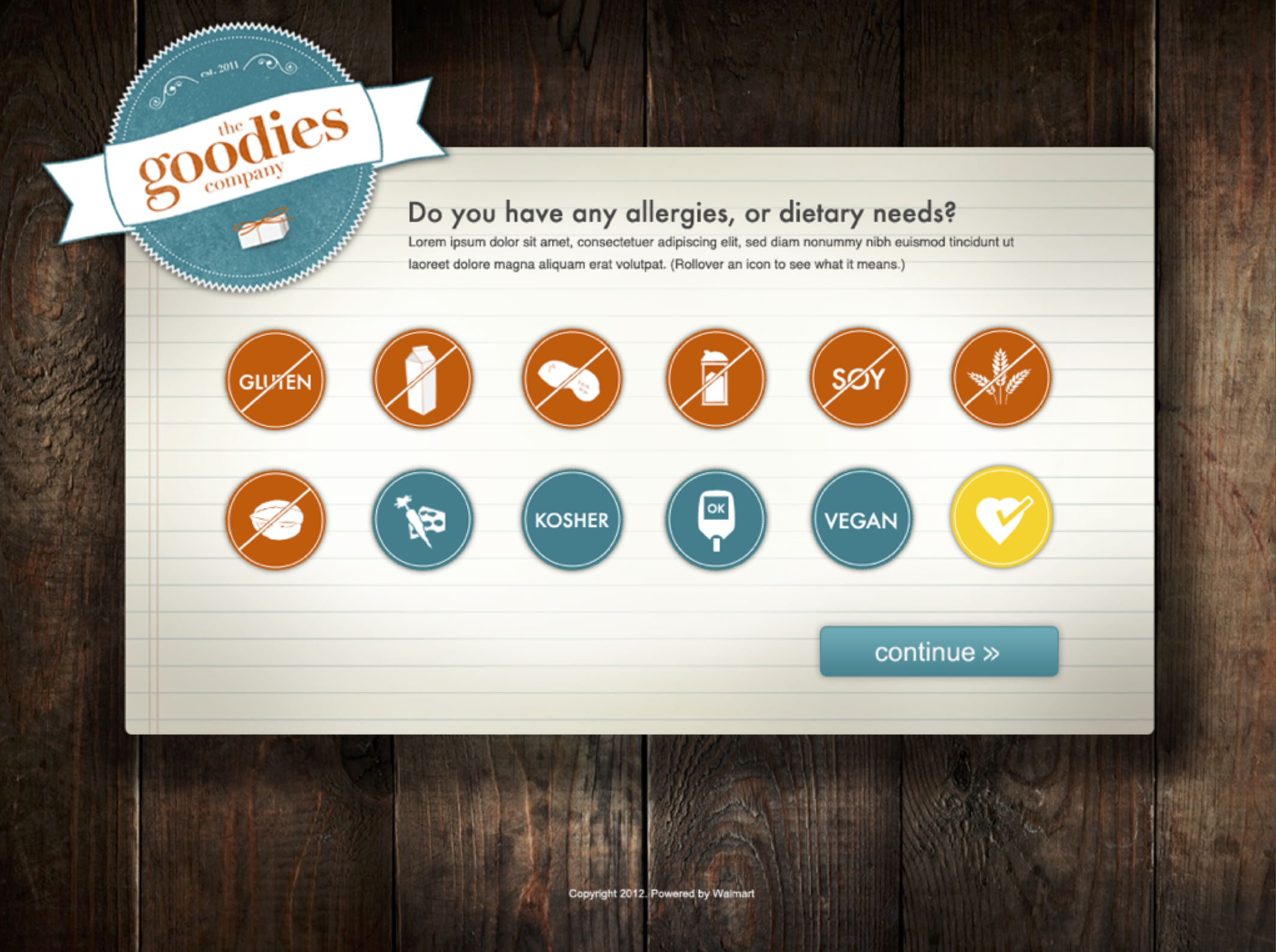
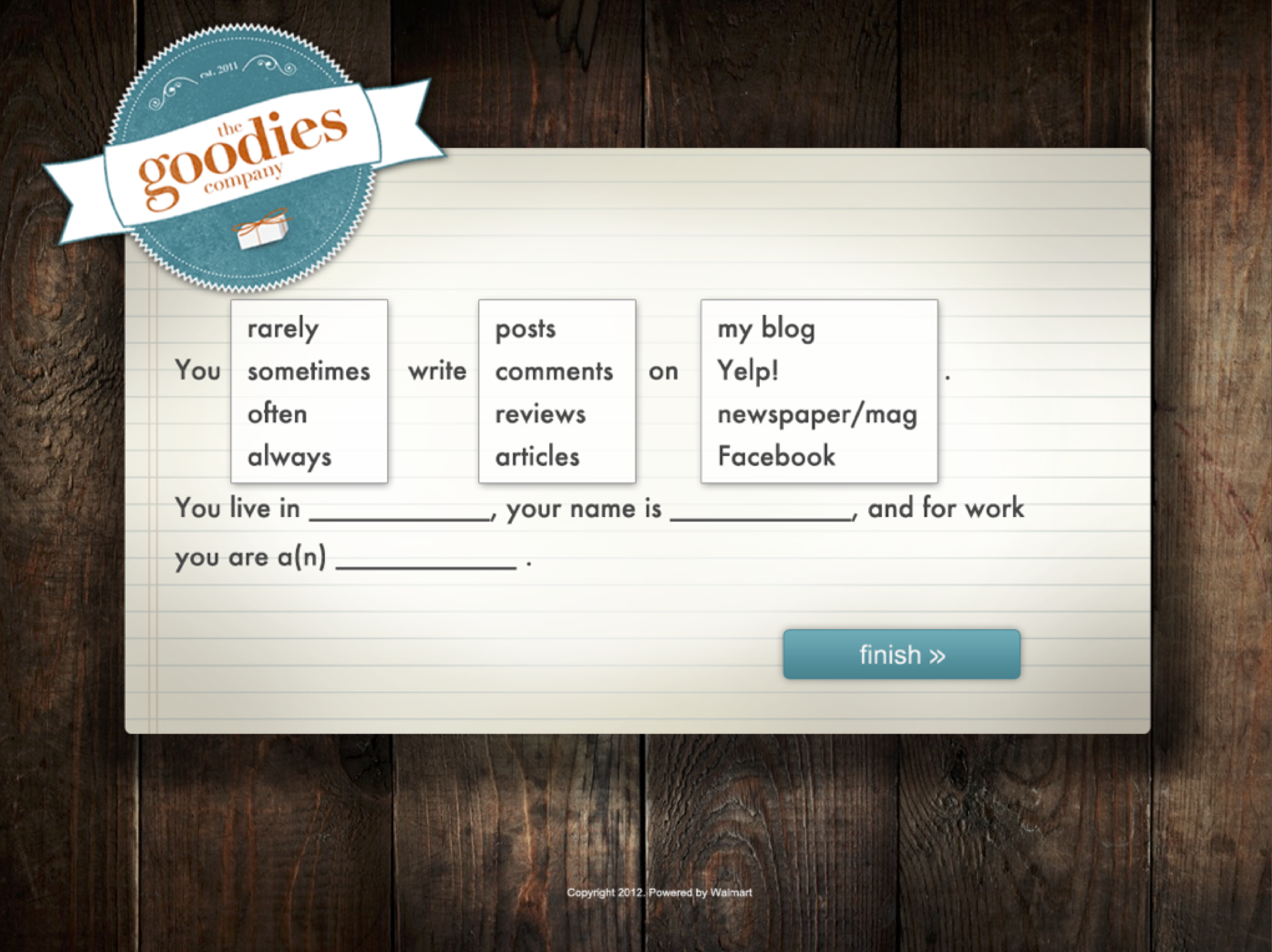
Walmart's first subscription box service—from concept to 100K subscribers in 6 months. Led the end-to-end product strategy, design, and launch across every touchpoint: user reviews, desktop and mobile experiences, culinary curation, gamification, warehousing, box design, print marketing, payments, and shipping.
The challenge:
This wasn't a feature—it was a brand. Named after Walmart founder Sam Walton's middle name (Goode), it had to feel premium and discover-focused while living inside a company built on low prices and efficiency. I built a team of 20 from scratch and aligned them around a single vision: make grocery shopping feel like opening a gift.
Launch and scale:
100K subscribers in first 6 months
$1.25M monthly net revenue within 15 months
First corporate player to compete with venture-backed subscription startups
Proved Walmart could win Millennial customers through experience, not just price
What made it work:
The magic was in the curation and brand cohesion. Culinary expertise drove what went in the boxes. Gamification made unboxing addictive. Reviews built community. Every piece reinforced the others—this wasn't a bundle of products, it was an experience system.
My role:
I owned "definition of done" across 10+ workstreams. With that many moving pieces, the hardest part wasn't building—it was knowing when each element was good enough to ship. I kept the team focused on brand integrity while moving fast enough to beat competitors to market.
What I'd do differently:
We deprioritized gamification features as we scaled to hit subscriber targets. Those elements made Goodies special—they're what turned customers into evangelists. I should have protected the brand magic more aggressively, even if it meant slower growth. Learned that the features that make a product beloved are usually the first ones cut under pressure.
Tags: 0-to-1 Product · Subscription Business · Brand Design · Cross-functional Leadership · E-commerce